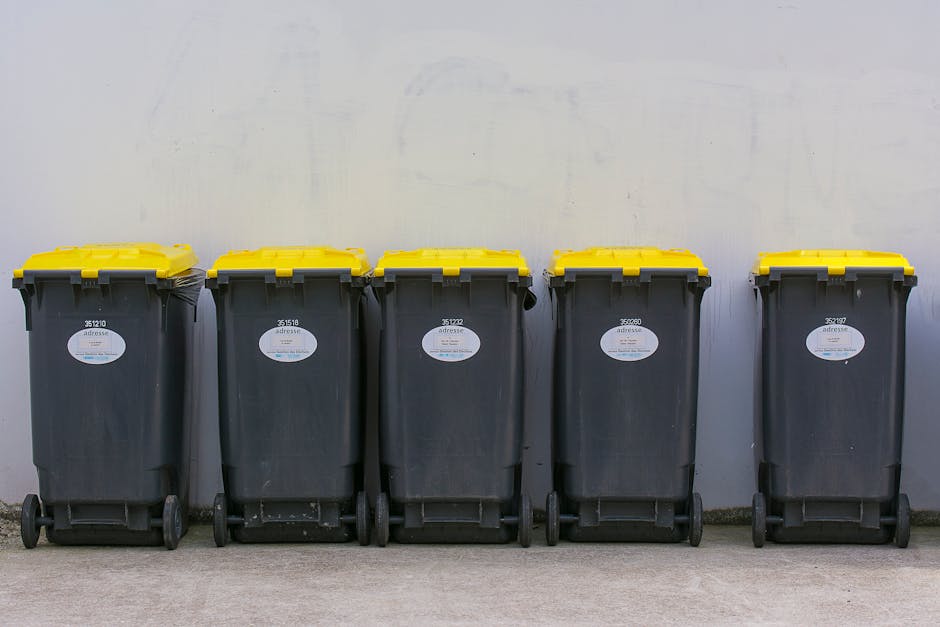
Wallington Business Rubbish Disposal Cost Savings Guide

If you run a shop, office, cafe, workshop, or rented workspace in Wallington, rubbish can quietly eat into your budget. It starts small: a few extra bags, a missed collection, a bulky item dumped in the corner, maybe an urgent clear-out that costs more than it should. Then, before you know it, waste becomes one of those annoying overheads that never seems to shrink.
This Wallington Business Rubbish Disposal Cost Savings Guide is here to help you take control of that spend without making your operation messy, slow, or non-compliant. We'll look at where the money goes, how to reduce it in practical ways, what to watch out for, and how to make smarter disposal decisions that fit real business life. Truth be told, most savings come from a handful of sensible habits rather than any clever trick.
And yes, some of it is just common sense. But common sense with a system behind it? That's where the savings happen.
Table of Contents
- Why Wallington Business Rubbish Disposal Cost Savings Guide Matters
- How Wallington Business Rubbish Disposal Cost Savings Guide Works
- Key Benefits and Practical Advantages
- Who This Is For and When It Makes Sense
- Step-by-Step Guidance
- Expert Tips for Better Results
- Common Mistakes to Avoid
- Tools, Resources and Recommendations
- Law, Compliance, Standards, or Best Practice
- Options, Methods, or Comparison Table
- Case Study or Real-World Example
- Practical Checklist
- Conclusion
- Frequently Asked Questions
Why Wallington Business Rubbish Disposal Cost Savings Guide Matters
Business waste is one of those costs people underestimate because it doesn't always arrive as one obvious bill. It creeps in through collection frequency, bulky removals, poor segregation, emergency clearances, overfilled bins, and time spent managing the whole thing. If you're operating near busy stretches of Wallington, even a small storage issue can snowball fast. One back room fills up, then the office starts using the corridor, and suddenly you're paying to remove mixed waste that could have been sorted earlier.
The money side matters, but so does the day-to-day flow of the business. A cleaner site is easier to work in, safer for staff, and less likely to trigger last-minute panic. Nobody wants to be scrambling for a solution after a delivery turns up and there's nowhere to put the packaging. Not a great feeling.
There's also a hidden planning benefit. When waste disposal is handled well, you can forecast costs with more confidence. That helps if you're comparing suppliers, managing several sites, or just trying to keep monthly overheads from bouncing around. In our experience, the businesses that save most are not always the biggest ones. They're the ones that track what they throw away and act on it early.
Key point: saving money on rubbish disposal is rarely about cutting corners. It's about reducing waste volume, avoiding unnecessary collections, and choosing the right method for the type of material you actually have.
How Wallington Business Rubbish Disposal Cost Savings Guide Works
The basic idea is simple: spend less by making rubbish easier to handle, easier to sort, and cheaper to remove. In practical terms, that usually means looking at five moving parts: waste type, volume, collection schedule, labour involved, and compliance risk. If one of those is off, the price often climbs.
Let's say a small office clears desks, old cardboard, broken chairs, and a few confidential files. If everything goes into one mixed pile, the job may need more labour, more vehicle space, and more careful handling. If it is separated in advance, the same clearance may be quicker and less costly. That's the pattern you'll see again and again.
Cost savings also depend on what your provider can do efficiently. For example, some loads are better handled through a scheduled business waste removal arrangement, while one-off bulky items may suit a separate collection. Choosing the wrong format is where businesses often overpay.
You should also think about the rhythm of your operation. Restaurants, salons, shops, building contractors, and offices create waste at very different rates. A weekly collection that works beautifully for one company could be wasteful for another. There's no magic size-fits-all answer, annoying as that is, but there is a better fit for each setup.
To make the guide work in real life, you need a simple process:
- Identify what waste you actually produce.
- Separate recyclable and reusable material where practical.
- Reduce avoidable volume before collection day.
- Match collection frequency to actual demand.
- Keep an eye on hidden extras such as loading time or access issues.
That's the backbone of the savings approach. Nothing fancy. Just a cleaner, more deliberate way to handle waste.
Key Benefits and Practical Advantages
When businesses tighten up rubbish disposal, the benefits tend to stack up. Some are obvious; others only show up after a few months. Below are the ones that matter most.
| Benefit | What it means in practice | Why it saves money |
|---|---|---|
| Less waste volume | You reduce what goes out in each collection | Fewer collections and lower transport effort |
| Better segregation | Cardboard, furniture, and general waste are handled more appropriately | Less contamination and fewer expensive mixed loads |
| More predictable costs | You know what to expect each month | Budgeting becomes far easier |
| Reduced disruption | Clear work areas and less clutter | Staff spend less time dealing with waste problems |
| Improved compliance | Waste is handled in a more responsible way | Lower risk of avoidable penalties or rework |
There's a softer benefit too. Staff usually work better in a place that feels under control. It's hard to quantify, but you notice it. Fewer overflowing boxes. Less "where do I put this?" chatter. Less that-sink-in-the-corner smell from old packaging and wet cardboard on a damp morning.
For customer-facing businesses, tidy waste handling can also shape first impressions. A shopfront with no pile of broken display packaging at the side sends a better message. Simple, really.
And for any business with regular clear-outs, using services such as office clearance or targeted removal for specific item types can be more efficient than paying for a broad-brush solution every time.
Who This Is For and When It Makes Sense
This guide is useful for a wide range of Wallington businesses, but it tends to matter most for organisations that generate mixed waste, bulky waste, or frequent packaging. If you're unsure whether your current setup is costing too much, that uncertainty is usually a sign to review it.
It makes particular sense if you are:
- a small office trying to reduce overheads;
- a retail business dealing with packaging, seasonal stock, or display waste;
- a landlord or managing agent responsible for commercial premises;
- a tradesperson or contractor generating site debris;
- a hospitality venue with routine cardboard, containers, and occasional bulky items;
- moving, refurbishing, or closing a unit and needing a one-off clear-out.
It also makes sense when waste starts taking up time. If someone in the team is constantly shuffling bins, calling for last-minute help, or sorting through a messy pile before collections, that labour has a cost. Sometimes the waste bill is only half the story.
There's a common pattern with growing businesses: they start with a simple arrangement, then the business changes, but the waste plan doesn't. That mismatch can go on for months. It's not dramatic, just quietly inefficient.
If you're already exploring related services like waste removal for general clearances, it's worth pausing to ask whether each type of rubbish is being handled in the most cost-effective way.
Step-by-Step Guidance
Here's a practical way to approach cost savings without turning the whole thing into a spreadsheet project from hell. Keep it simple, but do it properly.
-
Audit your current waste
Walk through the site and note what's being thrown away over a typical week. Look at cardboard, general rubbish, furniture, appliances, office paper, food waste, and any awkward items. You may spot waste streams you never really noticed.
-
Separate what can be reused or recycled
Cardboard, clean office paper, some furniture, and certain equipment can often be handled more efficiently when separated. The cleaner the material, the easier it is to deal with. That's especially true for packaging-heavy businesses.
-
Check whether collection frequency is too high
Many businesses pay for more collections than they need. If bins are never full, you may be over-serviced. If they are always overflowing, you may need a better plan, not just a bigger bill.
-
Reduce waste before it leaves the site
Flatten boxes, break down packaging, store items properly, and remove reusable material quickly. Small changes add up. A stack of unflattened boxes can eat up half a collection space before anyone notices.
-
Match the collection method to the waste type
A one-off bulky clearance is not the same as a regular collection contract. Use the right service for the job. If you need a larger mixed-item clearance, something like builders waste clearance may be more appropriate than ad hoc handling, especially after works or refurbishments.
-
Review access, loading, and timing
If the provider has to navigate poor access, long carrying distances, or awkward timing windows, you may see higher costs. A tidy, ready-to-go collection point can genuinely reduce expense.
-
Track monthly spending and adjust
Once a system is in place, check whether the bill matches reality. If waste levels drop, the service should ideally reflect that. If not, ask questions. Politely, but firmly.
That process sounds basic because, well, it is. But basics done consistently save more money than flashy one-off fixes.
Expert Tips for Better Results
A few field-tested habits make a surprisingly big difference.
Keep waste points close to where rubbish is created. If staff have to walk halfway across the site to dispose of boxes, they tend to leave them near the work area instead. Then waste gets messy, mixed, and harder to remove.
Set one person to own the process. Not forever, and not as a thankless extra duty, but enough to keep standards steady. When everyone owns waste, sometimes nobody does. That's human nature for you.
Use visible labels and simple rules. "Cardboard only," "general waste," "confidential paper," and "bulky items awaiting collection" can prevent contamination. Clean signage sounds dull, but it works.
Watch for hidden labour costs. If staff spend ten minutes each day reorganising waste areas, that time adds up. You may not see it on a waste invoice, but you will feel it in the week.
Ask about recycling and sustainability options. A provider that can separate more of the load may help you reduce disposal cost while improving environmental performance. If that matters to your customers - and for many businesses it does - it can support your wider brand too. You can explore this further through recycling and sustainability.
Be realistic about special items. Fridges, broken appliances, mattresses, and sofas often need separate handling. Pushing them into a general waste plan usually ends badly, or at least expensively. For those cases, a dedicated option such as fridge and appliance removal or mattress and sofa disposal may make more sense.
One small but useful habit: keep a short log of every odd disposal job for a couple of months. It sounds fussy, I know. But it gives you a clearer picture of what is normal and what is eating into budget unexpectedly.
Common Mistakes to Avoid
Most overspending problems come from a few repeat mistakes. Not dramatic mistakes. Just the sort that creep in when everyone is busy.
- Ignoring waste composition. If everything goes in one mixed stream, you lose control over cost and recycling potential.
- Ordering collections by habit. A service that made sense last year may be wrong now.
- Leaving bulky items until the last minute. Urgent callouts nearly always cost more than planned clearances.
- Forgetting about confidential waste. Sensitive paper should not be treated like general rubbish. That's a risk, not just a cost issue.
- Not measuring what leaves the site. If you never track it, you can't really improve it.
- Mixing recyclables with contaminated waste. A few careless items can spoil a whole load and drive up disposal effort.
- Assuming cheaper is always better. The cheapest quote can become the most expensive option if it leads to missed collections, extra charges, or poor service.
There's one more mistake worth calling out: not planning around seasonal changes. Retailers in particular often generate more packaging before busy periods. Hospitality venues may see more waste during events. If you don't adjust, you either overpay or overflow. Neither is ideal.
Tools, Resources and Recommendations
You do not need a complicated toolkit to get control of rubbish costs. A few simple resources go a long way.
- Waste tracking sheet: a simple table recording what type of waste was removed, when, and why.
- Collection calendar: helpful for spotting whether pickups are too frequent or too far apart.
- Photo log: useful when showing how waste is being stored on site before a collection.
- Colour-coded labels: a straightforward way to help staff separate waste correctly.
- Supplier quote comparison: compare what is included, not just the headline price.
If you're dealing with office move-outs or renovation debris, it can also help to use a service aligned to the specific job rather than forcing one approach to do everything. For instance, businesses clearing out paperwork and equipment may benefit from confidential shredding alongside general clearance rather than mixing sensitive documents into the rest of the load.
For businesses planning larger clear-outs, pricing and quotes can be a useful place to understand how different jobs are usually priced, while book online may be the quickest route when you already know what needs removing. If you are still comparing options, about us can help you understand the service approach and standards behind the work.
One practical recommendation: keep a "future waste" folder with photos of awkward items that often reappear. Old monitors. Damaged chairs. Broken display units. Packaging from new stock. It sounds almost too simple, but it helps you forecast those recurring costs instead of reacting to them.
Law, Compliance, Standards, or Best Practice
Waste handling for businesses in the UK is not something to improvise. Even if your day-to-day focus is trading, service delivery, or keeping customers happy, you still need to think about responsible disposal, record-keeping, and safe handling where relevant.
For most businesses, the safest approach is to treat compliance as part of the operating system, not an afterthought. That means keeping waste separate where practical, using reputable carriers, storing rubbish safely, and avoiding contamination of recyclable loads. If you produce waste that includes confidential paper, electrical items, or potentially hazardous materials, the need for care goes up quickly.
Different waste types can carry different requirements. For example, electrical appliances and items with components may need more careful handling than ordinary office rubbish. Hazardous waste needs particular caution and should not be treated as if it were standard commercial waste. If you are unsure, ask before the job begins. Guessing is a poor strategy here.
It is also wise to follow basic site safety standards. Clear access routes, stable stacking, safe lifting practices, and suitable protective equipment all help reduce incidents. A tidy waste area is not just nicer to look at; it reduces slips, trips, and awkward lifting. Your back will thank you, probably more loudly than your spreadsheet will.
On the policy side, a business should ideally have a simple internal process covering:
- who is responsible for waste management;
- how different waste streams are separated;
- where waste is stored before collection;
- what happens with confidential or sensitive material;
- how staff report issues or missed collections.
If you want a fuller view of how the business approaches responsible operations, you can also look at the site's health and safety policy and insurance and safety information. Those details matter when you're trusting someone to handle rubbish in and around a working property.
Options, Methods, or Comparison Table
Different disposal methods suit different situations. Choosing well is where a lot of the savings live.
| Method | Best for | Pros | Watch-outs |
|---|---|---|---|
| Regular business waste collection | Ongoing office, shop, or workplace rubbish | Predictable, convenient, low effort | Can become expensive if collection frequency is too high |
| One-off clearance | Moves, refits, closures, or sudden clutter build-up | Fast reset of space | May cost more if left until urgent |
| Specialist item removal | Appliances, furniture, mattresses, or awkward items | Better handling of specific waste types | Needs correct booking and description |
| Sorted recyclable waste stream | Cardboard-heavy or paper-heavy businesses | Can reduce disposal burden and improve sustainability | Requires staff discipline and tidy storage |
If you run a premises with frequent refits or property turnover, related services like flat clearance, home clearance, or house clearance can sometimes be useful reference points for how larger clear-outs are structured, even if your own job is commercial. The main lesson is the same: match the service to the waste profile.
For some businesses, a combination works best. For example, a cafe might keep routine waste separate, while booking a one-off collection after a redesign. A builders' merchant or contractor may use one stream for regular debris and another for large clearance jobs. That blended approach is often the sensible one.
Case Study or Real-World Example
Here's a realistic example based on the kind of pattern businesses often face in Wallington.
A small professional office near the town centre had built up a habit of ordering regular waste collections on a fixed schedule, even though the team had shrunk and more work was done digitally. At the same time, old chairs, boxes of archived paper, and a broken filing unit were sitting in a back room because nobody wanted to deal with them separately. So the business was paying for frequent general waste, plus occasional rushed clearances when the clutter got in the way.
When the site reviewed its waste properly, three things became clear:
- the routine collection frequency was higher than needed;
- cardboard and paper were being mixed into general waste;
- bulky items were left too long, turning a simple task into an urgent one.
After reorganising the waste area, introducing simple labels, and planning bulky item removal earlier, the business reduced avoidable waste handling and made its monthly spend more predictable. Nothing dramatic, no miracle. Just a more sensible rhythm.
That kind of result is common. Not because the business is especially lucky, but because waste tends to reward attention. Ignore it and it costs more. Manage it and it becomes much less troublesome. Funny how that works.
Practical Checklist
Use this checklist to tighten up your disposal process and spot quick savings opportunities.
- Review what waste your business creates in a typical week.
- Separate cardboard, paper, furniture, and other distinct waste types where possible.
- Check whether collection frequency matches actual volume.
- Identify bulky items that should be removed before they become a problem.
- Make sure waste storage areas are clean, visible, and easy to access.
- Use clear labels for staff and anyone helping with disposal.
- Compare costs based on service content, not headline price alone.
- Keep confidential materials out of general waste.
- Log recurring waste issues so you can plan around them.
- Review the arrangement after seasonal peaks, refits, or staffing changes.
If you can tick most of these off, you're already ahead of a lot of businesses. Honestly, more than a lot.
Get a free quote today and see how much you can save.
Conclusion
The smartest way to reduce business rubbish disposal costs in Wallington is usually not to chase the cheapest option blindly. It is to understand your waste, reduce what you throw away, and choose the right handling method for each job. That approach saves money, lowers stress, and keeps your site running better day to day.
If your current waste process feels a bit makeshift, that's fine. Many do. The good news is that small changes can make a real difference quite quickly. Separate better, collect smarter, and stop paying for habits that no longer fit how your business actually works.
And if you're standing in front of a pile of boxes or an awkward old cabinet wondering where on earth to start, start there. One sensible step. Then the next one. It adds up.
Frequently Asked Questions
What is the main way to save money on business rubbish disposal?
The biggest savings usually come from reducing waste volume, separating recyclable material, and avoiding unnecessary collections. If you stop paying to remove waste you don't actually need removed, costs fall quite naturally.
How do I know if my business is overpaying for waste removal?
Look for signs such as half-empty bins, regular collections that never seem to fill up, frequent urgent callouts, or mixed waste that could have been sorted better. If any of those sound familiar, it is worth reviewing the setup.
Is regular collection cheaper than one-off disposal?
It depends on how much waste you generate. Regular collections can be more efficient for ongoing waste, while one-off disposal is often better for bulky clear-outs or occasional jobs. The cheapest choice is the one that matches the actual waste pattern.
Can recycling lower my commercial waste costs?
Yes, in many cases it can. Cleaner, separated recyclable material may be easier to manage than mixed waste, and it can reduce how much general rubbish needs to be handled. It also supports better sustainability practices, which many businesses care about now.
What business waste is usually most expensive to remove?
Costs tend to rise when waste is bulky, heavy, mixed, contaminated, or urgent. Items that need special handling, such as appliances or confidential material, may also need a different process than ordinary rubbish.
How often should a business review its waste arrangement?
At least a few times a year is sensible, and sooner if your business changes. Staff levels, stock patterns, refurbishments, and seasonal peaks can all affect how much waste you produce.
What should I do with bulky office furniture?
Do not let it sit around until it becomes an emergency. Plan removal early and book a service that can handle bulky items properly. Chairs, desks, and cabinets often need a more specific approach than general waste.
Does poor waste storage affect cost?
Yes, it can. If waste is hard to access, badly stacked, or spread around the site, collection can take longer and become more awkward. A tidy, central storage point usually helps keep things efficient.
Are confidential documents safe to put in normal rubbish?
No, they should be handled separately. Confidential papers need a secure disposal route, not a general waste bin. If you deal with sensitive information, a proper shredding process is the safer option.
What is the best first step if I want to cut waste costs quickly?
Start by auditing what is being thrown away over one normal week. Once you know the waste types and quantities, you can spot easy fixes such as reducing collections, separating recyclable material, or booking bulky removals earlier.
Can a small business really save much on rubbish disposal?
Yes, even small businesses can make meaningful savings. A few changed habits, like flattening packaging and avoiding unnecessary pickups, can reduce waste spend without creating extra hassle.
When should I ask for professional help?
If waste is starting to interfere with operations, taking up storage space, or becoming hard to manage safely, it is a good time to get help. That's especially true for clear-outs, bulky items, or anything that may need specialist handling.